theiknpost.com/ — Navigating Public Trust Through the Indicator Survey
By Eko Wahyuanto
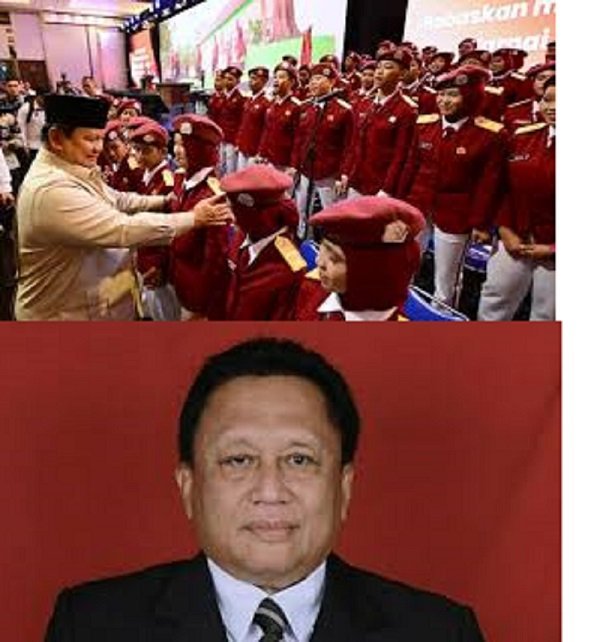
The latest survey by Indicator Politics Indonesia suggests that amid mounting global geopolitical tensions and a turbulent world economy, public satisfaction with President Prabowo Subianto remains remarkably resilient.
This is not a moment of euphoria. Beneath the figures of those who say they are “very satisfied” or “fairly satisfied” lies a deeper message—one that deserves to be unpacked with careful and critical analysis.
These numbers represent the vox populi: the pulse of public sentiment translated into data. The January 2026 Indicator survey should not be read as a report card, but as a dialectical lens through which to examine the gap between public expectations and policy realities.
Stability and Expectations
The public largely perceives President Prabowo as a firm and decisive leader. Ideologically, this reflects a strong social belief that a “strong state” provides guarantees of economic stability and security—two essential pillars in navigating national progress amid uncertainty.
In the Hobbesian tradition, society entrusts its sovereignty to a leader it believes capable of providing such guarantees. That mandate, however, will eventually be claimed as moral and political accountability.
The Indicator survey confirms this dynamic, particularly in the security sector, which emerges as a bright spot in public evaluations. Yet a critical clarification is needed: decisiveness is not an end goal, but an instrument toward social justice.
If public satisfaction is rooted in perceptions of bravery, that is merely the starting capital. That bravery will be tested not on conventional battlefields, but against adversaries far more corrosive—corruption and inequality.
Indonesia’s collective memory is shaped by a longing for stability. In political discourse, firmness is often equated with a leader’s ability to uphold law and order. Public satisfaction stems from the belief that presidential decisiveness acts as a shield against uncertainty.
At a time of global volatility, President Prabowo’s posture is seen as providing a sense of security. Indonesians do not only seek intellectual leadership, but leaders willing to assume political risks, make difficult decisions, and withstand pressure from both domestic and international fronts.
Weighing the Free Nutritious Meal Program
One of the government’s flagship initiatives, the Free Nutritious Meal (MBG) program, records a 72 percent satisfaction rate. Yet the survey also reveals a striking paradox: a majority of respondents remain skeptical that the program will be free from corruption.
This moral contradiction demands explanation. The public wants their children to receive free meals, but remains haunted by fears of budget leakage and abuse. MBG is not merely a food distribution scheme; it is an expression of the fifth principle of Pancasila—social justice. It represents the state’s constitutional obligation to ensure that basic biological rights are not neglected.
Public skepticism is understandable. The program was rolled out on a national scale within a relatively short planning horizon, following decades of neglect of similar constitutional mandates. Criticism, therefore, should be read as an alarm—one that underscores the urgency of keeping MBG free from corruption.
As President Prabowo has repeatedly warned, there must be zero tolerance for corruption in this program.
The argument that “as long as people are fed, leakage is acceptable” is deeply flawed. In public policy, integrity is a prerequisite for trust. Without transparency and accountability, even the most nutritious menu becomes tasteless when mixed with injustice.
The government must remain proactive in mitigating risks, including through rigorous audit systems that involve law enforcement agencies from planning to distribution stages. Transparency must be made visible to the public—not assumed.
The Economic Dilemma
The survey also shows that 45.3 percent of respondents feel basic necessities are becoming increasingly unaffordable. Here, ideological narratives often collide with lived realities. Inflation may be a technocratic figure reported by Statistics Indonesia (BPS), but for households it determines whether children can eat nutritious food or drink milk today.
If that is the measure, programs like MBG become part of the answer.
While BPS data remains essential for policy formulation, the government must move beyond mere data management toward genuine food sovereignty. Poverty, cited by 10.9 percent of respondents, is not destiny—it is a policy burden, particularly within distribution and supply chains that require urgent reform.
Social assistance cannot be relied upon indefinitely. It functions as a temporary bandage, not a cure. What Indonesia needs is economic self-reliance, enabling citizens to develop immunity against recurring shocks to food sovereignty.
Combating Corruption
One of the most significant drivers of public satisfaction is the perceived commitment to fighting corruption. This constitutes a sacred social contract, with nearly 80 percent of respondents believing there is a strong enough broom to clean the bureaucratic floor.
Yet corruption eradication cannot rest on the President alone. It is a collective endeavor. If institutions such as the Corruption Eradication Commission (KPK), the Attorney General’s Office, and the National Police experience fluctuating levels of trust, national leadership must ensure all legal instruments operate in harmony.
Public courage to act as whistleblowers is equally indispensable.
Sustaining the Mandate
The January 2026 Indicator survey offers a crucial lesson: Indonesians are capable of enduring hardship while still holding onto hope. Their critical stance toward process should be seen as an entry point for improvement, not resistance.
They may accept economic difficulty—reflected in the 45 percent “moderate” assessment—as long as they see honest and firm leadership. President Prabowo’s navigation of his cabinet has reinforced this perception.
Public satisfaction is fuel, not a resting place. Critical notes on MBG and concerns over rising prices are, in essence, letters of care from the public—urging the government to work harder, not less.
The Prabowo administration is theoretically on the right path, but implementation must be vigilantly guarded as the real test unfolds. Attractive statistics must not obscure harsh realities.
Ultimately, the success of a government is not measured by how many people praise it in surveys, but by how few remain hungry or subjected to injustice. That is the true benchmark of leadership—and the mandate now rests with President Prabowo to prove it through policies that nourish not only bodies, but the dignity of the nation.
Dr. Eko Wahyuanto is a public policy analyst.
https://ebooks.gramedia.com/id/majalah/matra-indonesia/jan-2026